How I Plan a Trip
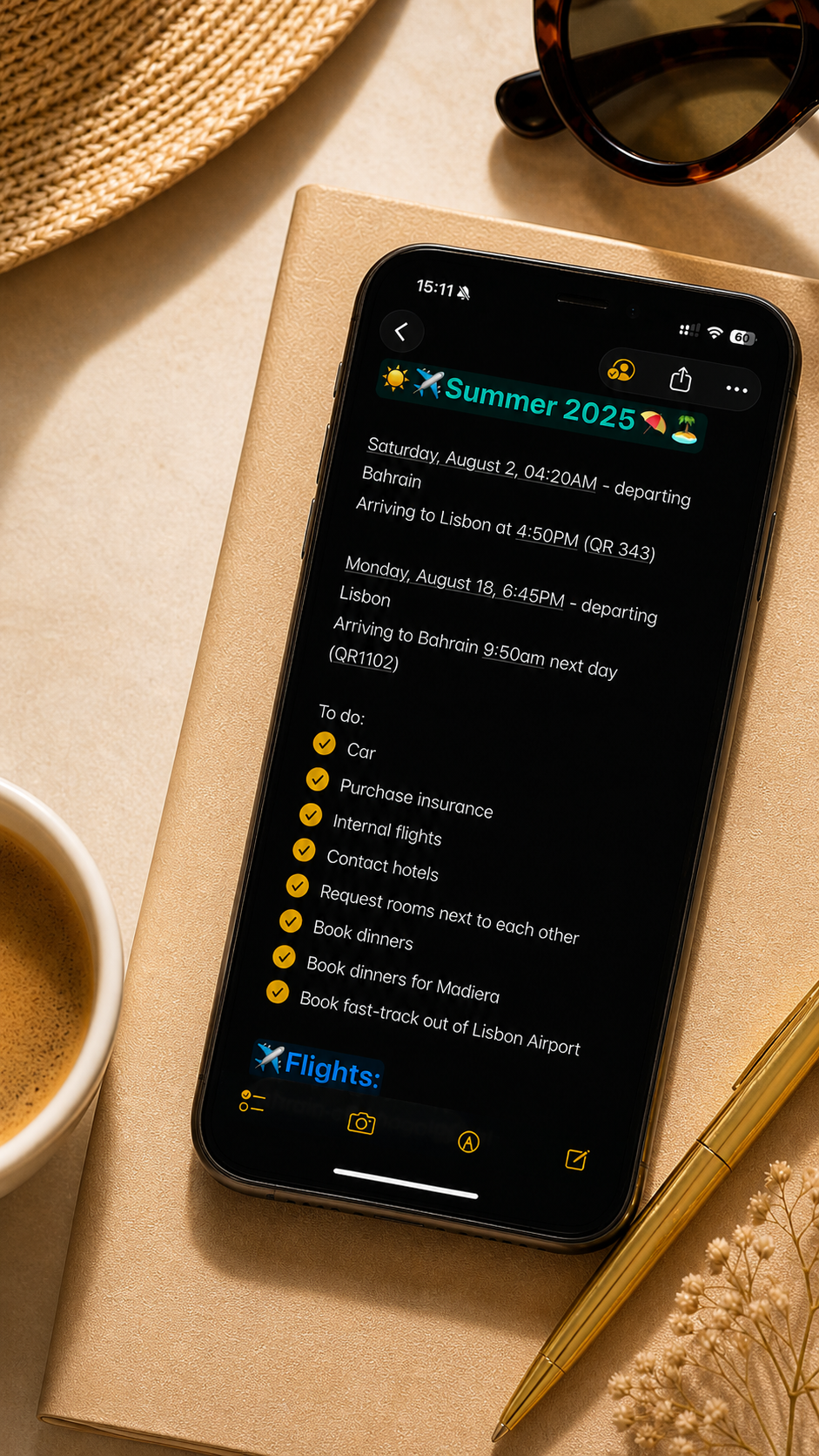
I get asked this question often. How do you plan your trips?
The honest answer is that I plan them very carefully. Some might say obsessively. I prefer to call it thoughtfully. As a family, we have one rule when it comes to travel. We always try to explore somewhere new. We stick to that rule about 80 percent of the time. The remaining 20 percent is reserved for places we simply love too much not to revisit. Dubai is one. London is another. Some destinations feel familiar in the best possible way, like returning to an old friend.
For most trips, though, we start fresh. By December, we’ve usually locked in our destination and booked our flights. They are always refundable because life can be unpredictable, and I like having flexibility. Once the dates are confirmed, the real planning begins.
My starting point is always Google Maps. Not travel blogs. Not social media. Certainly not influencers. Just Google Maps. It tells me everything I want to know, from distance between towns, to terrain, to coastline, to drive times. As a family, we love variety. We enjoy beaches, nature, and city life equally, so I make it a point to build trips that give us a little bit of everything. I want mountains and seaside villages. I want lively city streets and quiet corners. I want the trip to feel layered.
Once I understand the geography, I start thinking about how we will move from one place to another. We love a road trip and often build our holidays around one. Six hours of driving feels comfortable. Eight is our maximum, and even then, we break every two hours to stretch, snack, and reset. We’ve done trains. We’ve done flights. We’ve done automobiles. If you know, you know. But there is something about discovering a country by road that always feels more personal.
Years ago, all of this planning lived in an Excel file. Yes, an actual spreadsheet. The accountant in me thought it was the perfect tool, and honestly, it was. My friends still laugh about it, but a surprising number of them have asked me to share that spreadsheet. These days, I’ve modernized a little. My master plan now lives in a shared note on my iPhone that my husband and I constantly update and reference. It’s still highly organized, just a little less corporate.
Before I even choose hotels, I map out enough destinations to make sure we have balance in the trip. Once I’m happy with that, I begin the hotel search. I use Booking.com for almost everything, mainly for research and price comparisons. My filters are simple. Five-star and air conditioning. That’s it. I’ve learned that the more filters I apply, the more likely I am to miss charming boutique hotels, family-run properties, or hidden gems with real character.
This is where the deep dive begins. I check Google reviews, user-uploaded photos, Tripadvisor, Instagram, Facebook, and anything else that gives me a clearer picture. I also pay close attention to how hotels respond to customer feedback. That tells me a lot. Are they attentive? Do they care? Are they thoughtful in how they handle criticism? These things matter. For each city or town, I shortlist three to five hotels, and once I’ve narrowed it down, I sit with the family and we decide together.
Lately, I’ve started contacting hotels directly, and more often than not, it pays off. I usually get a better rate, and sometimes they include breakfast, late checkout, or other perks. It never hurts to ask.
From start to finish, this process takes me around eight weeks. My goal is to have all hotel bookings finalized by February in the year we travel. Once that’s done, I move on to restaurants and excursions.
For recommendations, I rely heavily on hotel concierges. In my experience, they are excellent. Their recommendations are thoughtful, local, and usually spot on. I only book structured plans for about three days out of a week-long trip. The rest, I leave open. That space is important because some of the best moments happen when there is nowhere specific you need to be.
One thing I almost never do is go somewhere because an influencer recommended it. That is usually the very last thing that would convince me to visit a place. I trust local recommendations far more. For excursions beyond what the hotel suggests, I’ve found Viator incredibly useful. It’s reliable, easy to use, and has led us to some wonderful experiences over the years.
So that’s how I do it. A lot of research, a lot of notes, and probably more planning than most people think is reasonable. But when the trip unfolds exactly the way you hoped it would, every bit of effort feels worth it.
And the memories? Well, they’ll last a lifetime.